
Queensland Energy Update: Low Daytime Prices and Smart Strategies for QHA Members
The new year presents a strategic opportunity for Queensland hotels to review energy use and manage costs more effectively. With strong renewable generation, expanding battery storage, and supportive policy settings, the current market environment provides a solid foundation for improving energy efficiency, planning infrastructure upgrades, and taking advantage of favourable pricing conditions.
Queensland Electricity Market Overview – January 2026
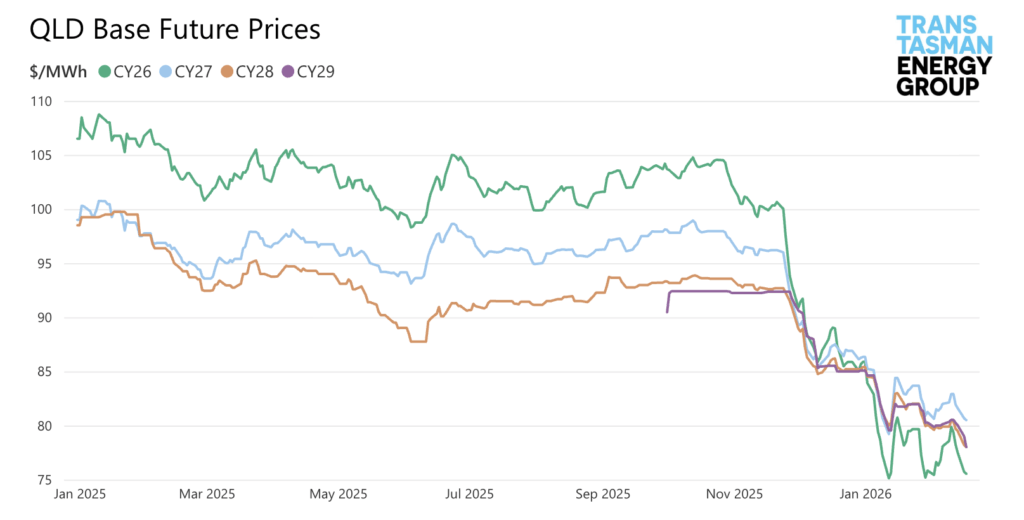
Queensland’s electricity market continues to benefit from lower wholesale prices, reaching some of the most competitive levels seen in recent years. Strong rooftop and utility-scale solar generation, moderate summer demand, and the absence of major supply disruptions have supported stable daytime pricing. However, evening and shoulder periods remain more sensitive, driven by declining solar output and variable wind generation.
These market conditions present a favourable environment for large energy users to optimise daytime energy consumption while managing exposure to higher costs during peak demand periods.
Network Tariff Update
For the 2025–26 regulatory year, the Australian Energy Regulator (AER) has approved Ergon Energy’s distribution pricing framework, introducing modest adjustments to network tariffs based on updated revenue allowances, demand forecasts, and inflation.
Tariffs continue to be structured by connection type and demand profile, directly influencing the distribution cost component of electricity bills for commercial and industrial customers.
Notably, a major retailer has advised they will opt out of the reassignment for smart meter customers on Demand Small tariffs, meaning these customers are expected to remain on the Demand Small tariff after 1 July 2025. However, in some cases, businesses may benefit from being reassigned to the Small Demand tariff, which can offer lower network costs depending on usage patterns.
We have been proactively working with Ergon Energy to request individual tariff reviews and facilitate moves back to the Small Demand tariff where it is more cost-effective, helping eligible customers reduce ongoing network charges.
Understanding how these tariff settings apply to your site is essential for accurate budgeting, procurement planning, and identifying opportunities for cost savings.
How QHA Members Can Reduce Energy Costs and Improve Certainty in 2026
Lower daytime electricity prices create an opportunity for hotels to reduce operating costs by shifting energy-intensive activities where possible. However, ongoing exposure to evening peaks, network tariff changes, and demand charges means careful energy management remains essential.
By reviewing energy contracts, aligning operations with lower-cost periods, and considering options such as solar, battery storage, or demand response, hotels can improve cost certainty and system reliability.
As long-standing partners of QHA for nearly two decades, Trans Tasman Energy Group (TTEG) is here to support members through these market and policy changes. We provide free bill checks, identify savings opportunities, recommend optimal energy solutions, and manage procurement strategies, ensuring businesses are positioned to take advantage of favourable market conditions while mitigating risks from tariff adjustments or supply disruptions.
To discuss your energy strategy, contact Jordan Manning (TTEG’s QHA Account Manager) on 0425 983 338 or email jmanning@tteg.com.au.